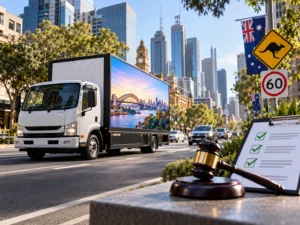
Yes, mobile billboards are legal in Australia, but they are not unrestricted. The rules can depend on the state, council area, road being used, parking or stopping conditions, vehicle setup, and whether the display is printed or digital.
The clearest way to understand mobile billboard laws in Australia is to separate compliance into 5 layers:
- Vehicle legality
- Road use
- Parking or stopping
- Advertising-display rules
- Local council requirements
Digital displays can add another layer because brightness, glare, animation and driver distraction may also be considered.
The answer to whether mobile billboards are legal in Australia is yes in principle, provided the vehicle and campaign operate within the rules that apply to the location and display type.
A mobile billboard can be lawful while travelling on one road yet face different requirements when it stops, parks or operates close to a particular site.
Australian regulation is also split across different authorities. State road and planning rules can apply alongside local council requirements, which means one national rule does not cover every campaign.
The broader Mobile Billboard Advertising Guide explains how mobile formats operate within Australian campaigns.
What Rules Can Apply to Mobile Billboard Advertising?
Mobile billboard regulations in Australia can involve several separate compliance questions.
1. Vehicle Standards
The truck, trailer, or other mobile advertising unit must meet the vehicle and registration requirements that apply in the relevant jurisdiction.
2. Road Use
Normal road rules still apply while the advertising vehicle is moving, including road access, traffic controls and vehicle restrictions.
3. Parking and Stopping
Parking legality is separate from driving legality. A location that is lawful to travel through may still restrict stopping, parking or standing advertising vehicles.
4. Advertising Display Rules
Roadside advertising can be regulated where signs may affect safety, visibility, or driver attention.
5. Council Requirements
Local councils can impose additional controls over advertising devices, standing vehicles and particular locations.
Moving vs Stationary Mobile Billboards
Moving and stationary mobile billboards can create different compliance issues.
A moving campaign primarily needs to account for lawful vehicle operation, road rules and the display itself. A stationary truck or trailer may trigger closer attention to parking, stopping, local advertising controls or the way the vehicle is being used.
Brisbane City Council, for example, distinguishes advertising on vehicles from certain prohibited standing vehicle signs under its local advertising rules. NSW planning guidance also specifically references enforcement relating to illegal parked trailer advertisements.
That makes mobile billboard route planning part of compliance as well as campaign strategy.
Related: How to Choose Routes for Mobile Billboard Advertising Campaign
A Legal Route Does Not Automatically Mean Legal Parking
A truck may be permitted to drive on a road but still face separate stopping, parking, or local advertising restrictions when it remains in one location.
Do Rules Change Between Australian States?
Yes. Mobile billboard laws in Australia are affected by state-based road, planning and transport frameworks, while councils can add local requirements.
New South Wales
NSW planning controls regulate advertising and signage, particularly around transport corridors and road-safety considerations. State guidance also acknowledges specific controls around parked trailer advertisements.
Victoria
Victoria applies road rules and planning controls, while animated or electronic signage near certain freeways and arterial roads can require transport referral and road-safety assessment.
Queensland
Queensland’s roadside advertising framework considers the location, placement, design and operation of advertising devices, particularly where driver distraction or road efficiency may be affected. Local council rules can also apply.
The practical takeaway is simple: state rules matter, but council rules can matter just as much.
Do Digital Mobile Billboards Have Extra Restrictions?
Digital mobile billboard regulations can involve additional considerations, including:
- Screen brightness
- Luminance
- Glare
- Flashing or animated content
- Image transition speed
- Display orientation
- Viewing distance
- Proximity to intersections or traffic signals
- Obstruction of road signs
- Driver distraction
- The surrounding road environment
Road authorities can assess whether electronic displays affect driver attention, road-safety signage or the surrounding traffic environment. These factors can affect whether an LED display is suitable for a particular route, stopping point or operating period.
Road authorities can assess whether electronic displays affect driver attention, road-safety signage or the surrounding traffic environment.
Victoria, for example, considers luminance, orientation, surrounding road conditions and road-safety impact when assessing certain electronic or animated signage. Brisbane City Council also requires illuminated or electronic advertising devices to comply with technical standards.
Campaigns using Digital Mobile Billboards therefore need to consider display behaviour as well as route legality.
Related: What Is a Mobile Digital Billboard Truck?
Related: Static vs Digital Billboard
Digital Displays Need More Than Creative Approval
LED brightness, screen behaviour, visibility, and driver-distraction concerns can affect whether a digital mobile billboard can operate safely and compliantly in a particular location.
Do Mobile Billboards Need Permits?
Mobile billboard permits depend on the jurisdiction, campaign setup and location.
A campaign may need to check permit or approval requirements where it involves stationary advertising, operation within a controlled road corridor, event areas or council-regulated advertising.
Queensland Transport and Main Roads, for example, states that some advertising devices within state-controlled road boundaries require written approval, licences or road-corridor permits.
There is no reliable universal answer that every mobile billboard needs the same permit. Requirements need to be checked against the actual route and operating method.
What Should You Check Before Starting a Campaign?
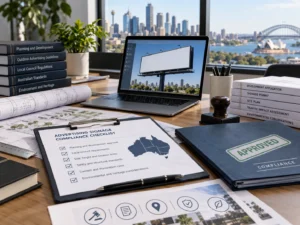
A practical compliance review should cover 7 areas:
- Confirm vehicle compliance.
- Review planned routes.
- Check parking and stopping locations.
- Check relevant state road rules.
- Check council advertising restrictions.
- Review digital-display requirements.
- Confirm event or site-specific controls.
The wider Mobile Billboard Advertising Guide provides additional campaign-planning context.
Are Mobile Billboards Legal in Sydney, Melbourne and Brisbane?
Mobile billboards can operate in Sydney, Melbourne and Brisbane, but local conditions differ.
Campaign planning for Mobile Billboards in Sydney, Mobile Billboards in Melbourne and Mobile Billboards in Brisbane needs to consider the relevant state road framework plus council-specific parking, advertising and display controls.
City size does not create a separate legal category. The exact route, display and operating method determine what needs to be checked.
Frequently Asked Questions
Are Mobile Billboards Legal in Australia?
Yes. Mobile billboards are generally legal when the vehicle, road use, parking, display and local requirements are satisfied.
Do Mobile Billboards Need Permits?
Permit requirements vary by jurisdiction, location, and operating method.
Can Mobile Billboards Park Anywhere?
No. Normal parking and stopping controls still apply, and local advertising rules can create additional restrictions.
Are Digital Billboard Trucks Legal?
Yes, but digital displays can face additional rules around brightness, glare, animation, and driver distraction.
Do Council Rules Apply to Mobile Billboards?
Yes. Local councils can regulate advertising devices, standing vehicles, and particular locations alongside state-level requirements.
Plan Compliance Before the Campaign Goes Live
Legal mobile billboard operation starts with the route, stopping plan, display type, and local requirements before deployment begins.
Mobile Marketing Australia plans digital mobile billboards around campaign objectives while accounting for route conditions, operating environments and applicable local requirements.
Contact the best mobile marketing team in Australia today and let’s get your brand moving.